Reducing golf cart ownership costs starts with disciplined maintenance, not emergency repairs. The best savings often come from small habits repeated every week. Check tire pressure, battery connections, brake response, and unusual sounds before each busy operating period. A loose terminal can become a roadside failure. A soft tire can increase motor strain and shorten battery range.
John C. McCarty, a golf cart fleet maintenance consultant, says, “Preventive care is cheaper when it is scheduled, measured, and easy to verify.” His advice reflects a practical truth: maintenance records matter. Record battery-water checks, charging times, tire changes, belt inspections, and repair costs. These details reveal patterns that memory misses. They also help technicians diagnose problems faster.
For readers asking how to reduce golf cart maintenance costs, this guide focuses on useful actions rather than expensive upgrades. Keep batteries clean and properly charged. Use the correct water and charging procedure recommended by the manufacturer. Inspect cables for corrosion, especially after wet weather or coastal use. Store carts under cover when possible. Train drivers to avoid sudden acceleration, overloaded trips, and rough surfaces.
Some recommendations may not fit every fleet. That is worth admitting. A private cart used twice monthly needs a different schedule from twenty rental carts operating daily. Cheap parts can also create higher labor costs later. Review the numbers before choosing them. Careful maintenance is not perfect, but it is usually less costly than repeated breakdowns.
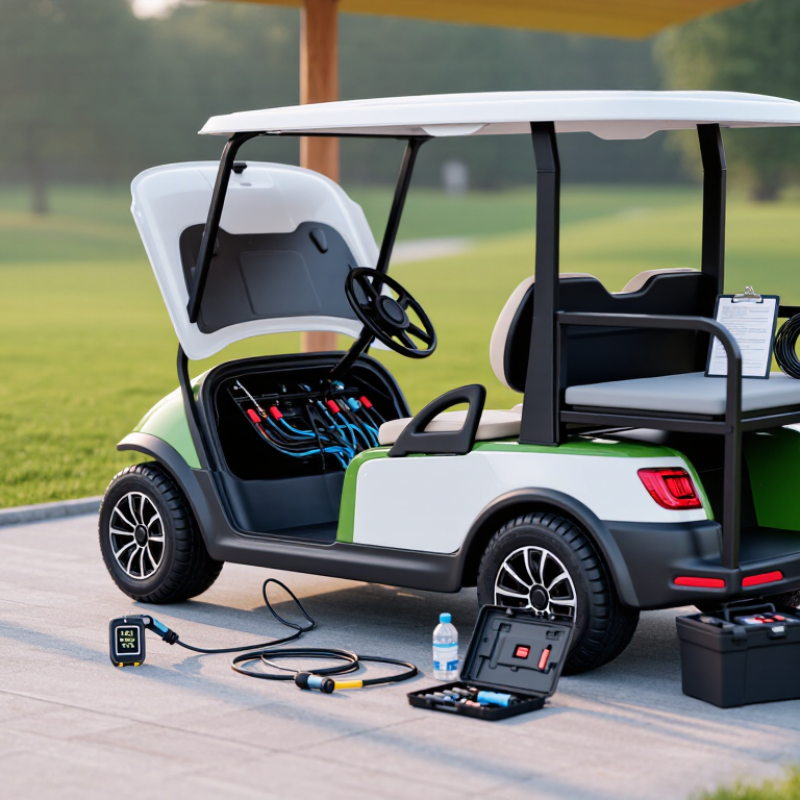
Golf cart maintenance costs usually begin with the battery system. Weak batteries reduce driving range and increase charging time. Overcharging, low water levels, and dirty terminals can shorten battery life. Charging equipment may also develop damaged cables or loose connections. These problems often appear small, but labor costs grow when they remain unnoticed.
Tip: Check battery connections monthly. Clean corrosion with suitable safety equipment, and follow the battery maker’s instructions. Record voltage readings and charging behavior. A simple maintenance log helps identify gradual changes. I once ignored a slightly swollen battery case during a busy inspection. That mistake caused extra downtime later. Small warning signs deserve attention.
Tires, brakes, suspension parts, and steering components create other regular expenses. Uneven tire pressure increases wear and makes the motor work harder. Worn brake shoes can damage related parts. Loose steering joints may also create unsafe handling. Electrical faults are less obvious. Moisture, storage conditions, and rough driving can damage switches, wiring, and controllers. Professional inspections can find these issues before repairs become extensive, although inspections themselves add a cost. That trade-off is easy to underestimate.
Tip: Inspect tire pressure, tread, brake response, and visible wiring before heavy use. Keep the cart under cover, especially in damp weather. Avoid carrying loads beyond its rated capacity. Seasonal storage also matters. Charge batteries correctly, protect tires from prolonged flat spots, and test the cart before returning it to service. Maintenance plans are useful, but they must reflect actual driving conditions. General schedules can be wrong for busy, hilly routes.
| Maintenance Cost Source | Typical Service Frequency | Typical Cost per Service | Common Annual Cost Impact | Main Causes of Higher Costs | Cost-Reduction Tips for 2026 | Priority |
|---|---|---|---|---|---|---|
| Battery replacement and battery care | Inspection monthly; watering for flooded batteries every 2–4 weeks; replacement commonly every 4–6 years | $0–$1,500 when replacement is required | $250–$400 averaged over a typical battery life | Deep discharge, overcharging, low electrolyte levels, corrosion, and leaving the cart unused for long periods | Use the correct charger, avoid repeated deep discharges, clean corrosion promptly, and check water levels only after charging and only in flooded batteries. | High |
| Tire wear and tire pressure | Pressure check monthly; replacement commonly every 2–4 years, depending on use and surface | $35–$100 per tire | $50–$200 | Underinflation, overloading, misalignment, aggressive cornering, and rough or uneven terrain | Maintain the pressure listed by the tire or vehicle manufacturer, rotate tires when appropriate, and avoid carrying loads above the rated capacity. | Medium |
| Brake system service | Inspection every 6–12 months; adjustment or replacement as needed | $50–$250 | $50–$150 | Steep terrain, worn brake shoes, contaminated components, poor adjustment, and frequent heavy loads | Inspect brake response regularly, keep the brake mechanism clean, descend slopes slowly, and repair abnormal noise or stopping distance immediately. | High |
| Steering and suspension components | Inspection every 6–12 months or after impact with a curb, pothole, or rough surface | $75–$400 | $50–$200 | Loose fasteners, worn bushings, damaged tie rods, improper alignment, and repeated operation on rough ground | Check for looseness, vibration, uneven tire wear, and unusual noise; tighten or replace worn parts before secondary damage occurs. | Medium |
| Drive belt, gearbox, or transaxle service | Inspection every 6–12 months; lubricant service according to the vehicle manual | $75–$500 | $50–$250 | Low lubricant levels, water intrusion, overloading, steep operation, worn belts, and delayed repairs | Use the specified lubricant, inspect seals for leaks, avoid sudden acceleration on steep slopes, and address grinding or whining sounds early. | Medium |
| Electrical connections and charging system | Visual inspection every 1–3 months; detailed inspection annually | $40–$300 | $40–$150 | Moisture, corrosion, loose terminals, damaged wiring, incorrect charger settings, and poor storage conditions | Keep terminals tight and clean, protect electrical parts from standing water, use the correct charger, and inspect cables for heat damage. | High |
| Motor or controller repairs | Inspection during scheduled service or when performance changes | $150–$1,000 | $50–$250 | Overheating, water exposure, overloaded operation, poor battery condition, and continued use after warning symptoms appear | Keep air passages clear, avoid overloading, prevent water entry, and investigate reduced acceleration, overheating, or intermittent operation quickly. | Medium |
| Routine cleaning, lubrication, and inspections | Basic cleaning after use; preventive inspection every 6 months | $25–$150 | $50–$300 | Neglected lubrication points, mud buildup, salt exposure, and missed preventive checks | Clean the undercarriage, lubricate approved points, rinse salt or chemicals promptly, and keep a written maintenance log. | Low |
| Storage and seasonal preparation | Before storage and during extended periods of non-use | $30–$200 | $30–$100 | Battery discharge, freezing conditions, moisture, tire flat-spotting, and exposure to direct sunlight | Store the cart in a dry covered area, follow the battery maker’s storage instructions, maintain suitable tire pressure, and inspect it before returning to service. | Low |
| Planning note: Cost ranges are typical independent-service estimates in U.S. dollars for recreational golf carts and can vary by cart type, labor rates, terrain, usage hours, battery technology, and part quality. Always follow the vehicle and battery manufacturer’s maintenance instructions. | ||||||
The battery system often creates the largest expenses. Weak batteries reduce range and increase charging time. Small problems can become costly repairs.
Check connections monthly and clean corrosion safely. Maintain suitable water levels when applicable. Follow the battery maker’s instructions carefully. Small signs matter.
Watch for swelling, unusual charging behavior, damaged cables, and loose connections. Record voltage readings over time. I once ignored a slightly swollen case, causing extra downtime.
Check tire pressure, tread, brakes, suspension, and steering components. Uneven pressure increases wear and motor effort. Loose steering joints can create unsafe handling.
Inspect tires, wheel nuts, brakes, lights, and steering weekly. Check battery terminals, water levels, and charging cables monthly. Keep dated records.
A qualified technician should examine brakes, suspension, wiring, and battery performance every three months. This adds a service cost. It may prevent larger repair bills later.
Hills, wet paths, heavy loads, and long routes can require shorter inspection intervals. A general calendar may not fit every cart. Conditions matter more than habit.
Charge batteries correctly and protect the cart from damp weather. Prevent prolonged tire flat spots. Test the cart before returning it to service.
Record operating hours, battery age, tire pressure, and repair history. Assign one person per shift and verify logs weekly. Our original schedule was too ambitious. A smaller checklist worked better.
Reducing golf cart maintenance costs starts with understanding where expenses come from, including battery wear, tire damage, brake problems, electrical faults, and neglected cleaning. A practical preventive maintenance schedule can help identify small issues before they become expensive repairs. Regular inspections, proper lubrication, battery care, and timely replacement of worn components can extend the vehicle’s service life and improve reliability.
To learn how to reduce golf cart maintenance costs, choose replacement parts based on durability, compatibility, and long-term value rather than the lowest purchase price alone. Good driving habits, correct charging procedures, and sheltered storage can also reduce unnecessary wear and weather-related damage. Finally, keep clear records of inspections, repairs, parts, and costs. Reviewing this information over time makes it easier to identify recurring problems, improve maintenance decisions, and measure real savings. A consistent, preventive approach can reduce downtime, control repair spending, and keep the golf cart operating efficiently for longer.

 Sarr Golf