A golf cart may look simple, but its reliability depends on small, repeatable checks: clean battery terminals, correct tire pressure, and brakes that respond smoothly. The U.S. Department of Energy’s Alternative Fuels Data Center explains that battery chemistry affects charging and maintenance needs. Trojan Battery’s technical guidance likewise stresses regular inspection and correct charging for lead-acid batteries. These are practical sources, not a universal failure-rate survey; published data do not establish one maintenance schedule for every cart.
Details matter. A loose cable can interrupt a ride. Low tire pressure can make steering feel heavy. A cart left wet and dirty may develop corrosion around its connections. “Small checks prevent bigger surprises” is a useful workshop rule, though it is not a verified quotation from a named expert. For model-specific procedures, consult the manufacturer’s owner and service manuals, such as those from E-Z-GO, Club Car, or Yamaha Golf-Car. Their instructions differ by model and battery type.
This guide answers how to maintain a golf cart properly, with attention to electric and gas-powered models. It will cover battery care, tires, brakes, cleaning, and storage, while noting when a trained technician should inspect the cart. Keep a pressure gauge and clean cloth nearby. Check the manual before adjusting anything. And be honest: a maintenance checklist helps, but it cannot replace careful inspection—or correct earlier neglect.
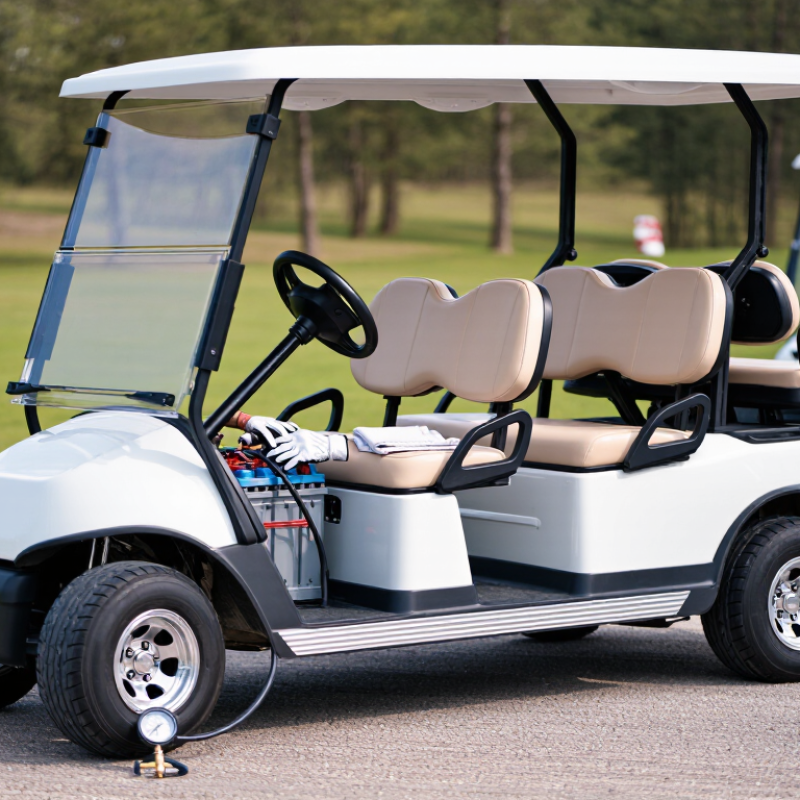
Before setting a maintenance routine, identify your golf cart’s power system. Electric carts need battery care, while gas models require checks for engine oil, fuel lines, and filters. Note the battery type, too; lead-acid batteries and lithium batteries have different care requirements. Check the owner’s manual or equipment labels rather than guessing. Small details matter.
Build a schedule around the cart’s actual use. For an electric model, inspect cables and battery connections for looseness or corrosion, and follow the manual’s charging guidance. With lead-acid batteries, check electrolyte levels only if the design allows it. For a gas cart, check oil and inspect belts and hoses at the intervals specified by its maker. Tire pressure and brake response deserve regular attention on either type. Keep a log.
Dusty paths, steep routes, frequent stops, and long periods in storage can change what needs attention. A cart used daily may need inspections more often than one driven occasionally. After a wet or muddy round, look beneath the chassis for packed debris, and check that lights and controls work. If a brake feels soft, a cable looks damaged, or a battery swells, stop using the cart and ask a qualified technician to inspect it. Maintenance intervals are easy to postpone. I have found that a simple calendar reminder is more dependable than memory.
These routine intervals are general guidelines: check tire pressure and lead-acid battery water monthly, clean battery terminals about every three months, and inspect the brakes about every six months. Lithium batteries do not require water-level checks. Always identify your cart’s battery type and follow its owner’s manual, since schedules vary by model and usage.
Regular checks of the battery, charger, and wiring can prevent many golf cart breakdowns. Park on a level surface, switch off the cart, and unplug the charger before inspecting connections. Look for loose cables, cracked insulation, corrosion, or heat-darkened areas around the terminals. A clean-looking connection can still be loose, so check gently without pulling on the wires. Follow the manual for your battery type; flooded lead-acid batteries and lithium batteries need different care.
Tips: Keep terminals dry and free of debris. Use only a charger compatible with the battery. Watch for charging lights that behave differently than usual. If a cable is damaged, stop and ask a qualified technician to inspect it.
Charge in a dry, well-ventilated area, and never ignore a burning smell or unusual warmth. Check that the charger plug fits firmly and that its cable has no cuts or flattened spots. After charging, note whether the cart’s range changes noticeably; that detail can help identify a battery or charging problem. I used to focus mostly on the battery itself, but the charger connection deserves the same attention. It is easy to overlook.
| Maintenance Item | Suggested Frequency | What to Inspect | Proper Maintenance | Warning Signs |
|---|---|---|---|---|
| Battery case and tray | Before each use; monthly in regular service | Look for cracks, swelling, leaks, loose hold-downs, or debris around the battery pack. | Keep the battery area clean, dry, and well ventilated. Do not use a cart with a damaged or leaking battery; arrange professional service. | Cracked or swollen case, unusual odor, liquid leakage, or a battery that moves in its tray. |
| Lead-acid battery water level | Check monthly, or more often in heavy use | For serviceable flooded batteries only, check that electrolyte covers the plates. | Use distilled water only. If plates are exposed, add enough water to cover them before charging; after a full charge, adjust to the level specified by the battery maker. Do not overfill. | Exposed plates, frequent low water, or electrolyte spilling from the cells. Sealed batteries must not be opened. |
| Battery terminals and cables | Inspect monthly; check sooner if performance changes | Look for corrosion, frayed insulation, loose connections, or heat discoloration. | Turn the cart off and unplug the charger before a visual inspection. Have a qualified technician clean or tighten connections using the battery and cart service instructions. | Heavy corrosion, damaged cables, a hot terminal, or intermittent power. Do not touch exposed conductors or bridge terminals with tools. |
| Charger, plug, and receptacle | Before each charge | Check the charger housing, cord, plug, and cart receptacle for damage, moisture, dirt, or bent contacts. | Use a charger approved for the cart’s battery chemistry and system voltage. Keep the charging area dry and ventilated; connect and disconnect as directed in the manuals. | Frayed cord, cracked plug, loose receptacle, burning smell, sparking, or unusual heat. Stop charging and have the equipment checked. |
| Charging cycle and indicator | During every charge | Confirm the charger starts, shows normal status, and completes its cycle according to its indicator or display. | Charge after use when practical and follow the battery maker’s charging instructions. Do not rely on a universal voltage target; specifications vary by battery type and system. | Repeated charging errors, unusually long charging, a charge that stops early, or significantly reduced driving range. |
| Electrical wiring and connectors | Monthly visual check; professional inspection at scheduled service | Look for loose plugs, pinched wires, worn insulation, corrosion, or cables rubbing against moving parts. | Keep wiring secured and clear of heat and moving components. Ask a qualified technician to test or repair damaged wiring; do not bypass fuses or safety devices. | Exposed wire, recurring blown fuse, flickering lights, unexpected shutdowns, or a burning smell. |
| Battery performance and pack condition | Monthly; record changes in range or charging time | Note changes in run time, acceleration, and charging behavior. Use suitable test equipment only if trained. | Follow the cart and battery manufacturers’ procedures for testing. Have a technician evaluate batteries that repeatedly underperform or differ noticeably within a pack. | Sudden range loss, weak acceleration, or one battery becoming unusually hot during charging or use. |
| Before storing the cart | Whenever the cart will be unused for an extended period | Check battery condition, charge level, and the storage instructions for the battery chemistry. | Store in a clean, dry, ventilated place. Follow the battery maker’s guidance for charge level and periodic charging; lithium and lead-acid batteries may require different storage practices. | Battery left deeply discharged, charger left connected contrary to its instructions, or signs of moisture or corrosion during storage. |
Safety note: Golf cart battery packs can deliver high current. Switch the cart off and unplug the charger before inspection. Wear appropriate eye protection, avoid sparks and flames around lead-acid batteries, and leave electrical testing or repairs to a qualified technician.
Tire pressure, brakes, steering, and suspension deserve a quick check before every round. Follow the cart’s own pressure label or manual; golf-cart tires may need different pressures from road-car tires. NHTSA tire-safety guidance notes that tires can lose about 1 psi per month and another 1 psi for each 10°F drop in temperature. Check cold tires with a gauge, not by sight. A soft tire can make the cart pull across a smooth path.
For brakes, listen for grinding and notice any longer stopping distance or a pedal that feels unusually soft. Check that the steering has no excessive play, then look for loose joints, leaking fluid, or uneven tire wear. Inspect suspension parts for cracks and loose fasteners, especially after bumpy routes. ANSI/ITSDF B56.8, a safety standard for personnel and burden carriers, addresses inspection and safe operation. Still, a checklist cannot replace a qualified technician when a fault persists.
Tips: Park on level ground, switch off the cart, and check tires before driving. Test brakes at walking speed in a clear area. Note small changes; I have learned that a faint steering wobble is easy to dismiss, but it may point to a developing issue. Keep a simple log of pressure readings and repairs.
After each round, rinse grass clippings and mud from the floorboard, wheel wells, and underside with low-pressure water. Use a soft brush around the pedals and steering joints; avoid forcing water into electrical connectors. Dry the cart, especially around metal fasteners. Grit trapped near hinges can act like sandpaper. Small details matter.
Lubricate moving parts only where the maintenance manual specifies, such as hinge pins, steering linkages, and brake pivots. Use a small amount, then wipe away excess so dust does not cling to it. The 2016 NACE International IMPACT study estimated that corrosion costs the global economy US$2.5 trillion annually, or 3.4% of global GDP. That figure covers many industries, not golf carts specifically, but it shows why removing moisture and dirt from exposed metal is sensible preventive care. Check the cart’s manual for lubricant type and service intervals. I still miss a dusty hinge sometimes; a quick inspection helps catch it.
Before long-term storage, park the cart on a dry, level surface and remove grass, mud, and moisture from the frame. Check tire pressure, then place the tires on clean flooring; soft ground can leave flat spots over time. Switch off accessories, remove the key, and inspect cables for loose connections or corrosion. Small details matter.
Battery care depends on chemistry. Lead-acid batteries usually need periodic charging and correct water levels; lithium batteries require the storage charge specified in their manual. Do not leave either type fully discharged. AAA’s 2019 electric-vehicle temperature tests found an average 41% range loss at 20°F when cabin heating was used. Those were passenger cars, not golf carts, but the results underline how cold can affect battery performance. Keep the cart within its recommended temperature range, and check its charge monthly.
Seasonal fleets need a simple inspection routine. The National Golf Foundation’s 2024 industry report counts roughly 16,000 U.S. golf facilities, where equipment readiness affects daily operations. Before returning a stored cart to service, inspect brakes, lights, steering, and tire condition, then take a short, low-speed test drive. I once overlooked a slow tire leak after storage; it was easy to miss in the garage. A written checklist helps catch what memory does not.
Park on level ground, switch off the cart, and unplug the charger. Look for loose cables, cracked insulation, corrosion, or darkened terminals.
Yes. Check it gently without pulling on the wires. Not always obvious.
Use one compatible with your battery type. Check that the plug fits firmly and the cable has no cuts or flattened spots.
Watch for unusual charging lights, a burning smell, warmth, or a noticeable drop in range. Stop if a cable is damaged and contact a qualified technician.
Park it on a dry, level surface. Remove mud and moisture, switch off accessories, remove the key, and check tire pressure.
Yes. Lead-acid batteries may need periodic charging and correct water levels. Lithium batteries need the storage charge specified in their manual. Do not leave either type fully discharged.
Check its charge monthly and keep it within the recommended temperature range. Cold can reduce battery performance.
Inspect the brakes, lights, steering, and tires. Then take a short, low-speed test drive. I once missed a slow tire leak; a checklist would have helped.
Knowing how to maintain a golf cart properly starts with identifying whether it is electric or gas-powered and following a maintenance schedule suited to its design and usage. Regularly inspect the battery, charging system, and electrical connections for signs of wear, corrosion, or loose fittings. Check tire pressure and condition, and examine the brakes, steering, and suspension to help keep the cart safe, stable, and comfortable to drive.
Routine cleaning and lubrication also help prevent dirt and moisture from causing unnecessary wear. Clean the body and key components with suitable materials, and lubricate moving parts as recommended in the cart’s maintenance guidance. Before long-term storage or seasonal use, prepare the cart by checking its power system, tires, and essential components, and store it in a clean, dry place. Consistent care can improve reliability, extend the cart’s service life, and help it perform well throughout the year.

Sarr Golf