Golf carts have become increasingly popular for various purposes, from leisure to transportation across vast terrains. A common question arises: how fast can a golf cart go? Understanding this speed is essential for safety and effective use in different environments. Industry reports suggest that average golf carts reach speeds between 12 to 20 mph on flat surfaces. However, performance varies on hills, grass, and uneven terrain.
The capability of a golf cart depends on its design and power source. Electric carts typically offer smoother rides on flat paths. Gas-powered models, on the other hand, may handle steep inclines better. For instance, a study published by the National Golf Foundation highlights that 75% of golf courses utilize carts, noting that terrain influences their operational speed significantly. On rougher ground, the speed may decrease due to resistance, affecting mobility.
It's crucial to reflect on how speed impacts safety. As we enjoy the versatility of golf carts, we must also acknowledge the limitations posed by terrain. Understanding how fast a golf cart can go enhances our experience while reminding us to prioritize responsible usage.
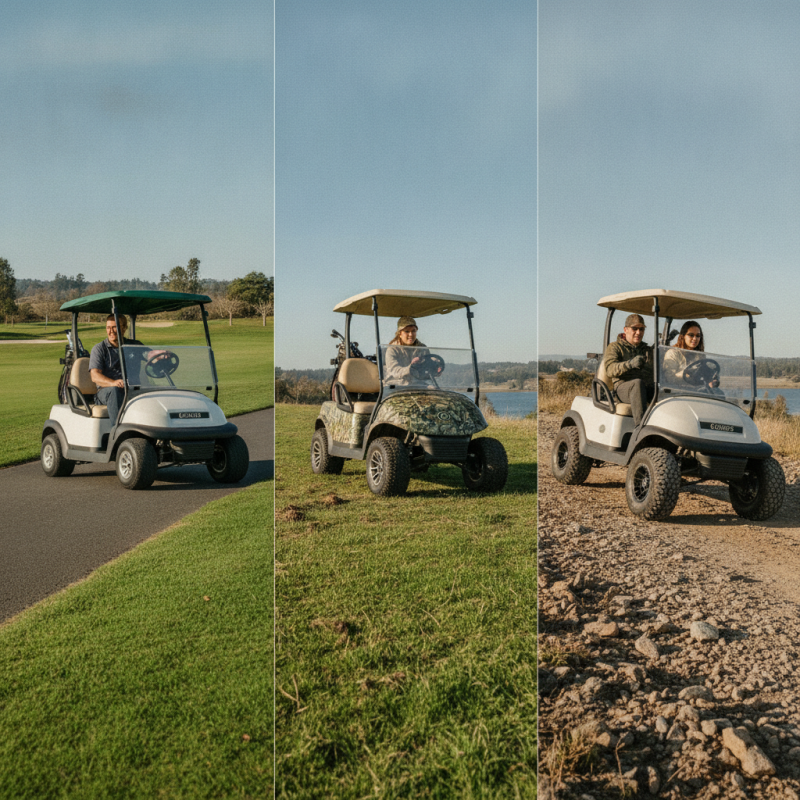
Golf carts are popular choices for short-distance travel, especially on flat terrains like golf courses and parks. Generally, they can reach speeds up to 15 to 25 miles per hour. This speed range varies based on the model and battery condition. Ideal for leisurely rides, these carts glide smoothly along flat surfaces, offering a comfortable experience. A well-maintained golf cart provides a reliable way to navigate even large open spaces.
However, performance can dip over time. Regular maintenance is essential to ensure optimal speed and functionality. Drivers must be aware that hills or uneven surfaces affect speed. Flat terrain allows the cart to perform at its best, but factors like weight and battery health still play a role. If a cart is carrying extra passengers or heavy equipment, it may not reach its top speed.
Additionally, it's crucial for users to be mindful of their surroundings. Despite their ease of use, unexpected obstacles can affect speed and control. Awareness can prevent accidents on busy paths. While golf carts offer many advantages on flat terrain, factors like maintenance and load should not be overlooked.
When it comes to golf cart speed, weight and power play crucial roles. Heavier carts may experience sluggish acceleration, especially on sloped terrains. This can be frustrating for users looking for a quick ride. The added weight makes it difficult for the motor to deliver peak performance, particularly on hills or uneven paths.
Power is equally important. A more powerful motor can compensate for additional weight. However, this balance is delicate. Too much power in a lightweight cart can lead to instability. Riders may find it difficult to control the cart, especially in tight turns. It's important to match power with the cart's design to ensure reliability and safety.
Different terrains also impact speed. On flat surfaces, carts can reach higher speeds. Conversely, rough, uneven ground dramatically slows them down. Even minor bumps can disrupt speed and stability. Understanding these dynamics can help users make informed decisions, enhancing their overall experience in various environments. Proper maintenance also influences performance, making it a vital consideration for optimal functionality.
| Terrain Type | Average Speed (mph) | Weight (lbs) | Power (hp) |
|---|---|---|---|
| Flat Grass | 18 | 500 | 10 |
| Sand | 12 | 600 | 8 |
| Hills | 10 | 700 | 12 |
| Paved Roads | 20 | 550 | 11 |
| Dirt Trails | 14 | 650 | 9 |
When analyzing how a golf cart performs on different terrains, hills present unique challenges. As the incline increases, the cart's speed decreases significantly. This is due to gravity's impact on acceleration. On a flat surface, a golf cart can easily reach speeds of 15 to 20 mph. However, on a steep hill, that speed may drop to just 5 mph or less.
Consider the weight of the cart and its passengers. A heavier load can sluggishly drag the cart down. This could lead to insufficient power, especially on steep inclines. It's essential to understand how cart specifications affect hill performance. Not every golf cart is built for uneven surfaces. Some struggle, while others excel.
There’s a need for awareness about safety. Uphill driving can strain the cart's motor. If not careful, the cart might stall halfway up a hill. Analyzing these factors helps improve the overall experience. Understanding terrain effects can prevent unexpected issues. Ultimately, testing various inclines can help users learn their cart's limits.
When it comes to golf carts, the surface type plays a crucial role in determining their speed. On level pavement, a standard golf cart can reach speeds of around 15-25 mph. However, this speed significantly decreases on rough or uneven terrain. According to a report from the National Golf Cart Association, driving on gravel or dirt surfaces can reduce speed by up to 50%. This makes navigating through a course much slower, potentially ranging from 5 to 12 mph.
Navigating hilly landscapes is another obstacle. Golf carts often struggle on steep inclines. A study by the American Society of Golf Course Architects revealed that carts can lose 30% of their speed when ascending a slope. The weight distribution and power of the cart impact its performance greatly in these situations. Users often overlook these factors, leading to a frustrating experience.
In addition, wet or muddy conditions present another challenge. The risk of slipping increases, and carts may bog down. Evidence shows that traction can decrease by nearly 40% in such elements. Golfers might need to adjust their speed expectations accordingly. Adapting to various terrains is key for an efficient and safe riding experience. Being aware of these limitations can enhance the enjoyment of golf outings.
When comparing electric and gas golf carts, performance varies significantly across different terrains. On flat surfaces, electric carts often excel due to their quiet operation and smooth acceleration. They can reach speeds of up to 25 mph. However, this speed drops substantially on uneven or steep hills. Electric models struggle more with steep inclines, as their batteries can drain quickly under pressure.
Conversely, gas-powered carts tend to perform better on rugged terrain. They can handle steep hills efficiently, maintaining speed even when the ground is uneven. Gas carts often have a torque advantage, allowing them to navigate tricky paths without a hitch. Yet, they emit noise and fumes, which can detract from the overall experience.
It's essential to consider individual needs when choosing. While electric carts are eco-friendly, their limitations in outdoor settings are evident. Gas carts provide superior power but at an environmental cost. Ultimately, understanding the terrain type and desired performance helps refine the choice. Reflecting on this can lead to a more informed decision, ensuring the right fit for your golfing trips.
: Surface type greatly influences speed. On flat pavement, golf carts reach 15-25 mph, while rough surfaces reduce speed to 5-12 mph.
On gravel or dirt, speed can drop by up to 50%. This slower speed can frustrate users during play.
Steep inclines can cause carts to lose 30% of their speed. Weight distribution also impacts performance on slopes.
Wet or muddy conditions decrease traction by nearly 40%. This can lead to slipping and a slower, less enjoyable ride.
Yes, electric carts perform well on flat terrain, reaching speeds up to 25 mph. They offer smooth and quiet operation.
Yes, gas carts excel on steep or uneven ground. They maintain speed due to better torque, despite being noisy.
Think about your typical terrain and needs. Electric carts are eco-friendly but have limitations, while gas carts offer power.
Yes, being aware of terrain limitations helps enhance enjoyment. Adjusting speed in varied conditions is essential for safety.
Gas carts can emit noise and fumes. This can detract from the overall experience, especially in quiet environments.
Electric carts may drain batteries quickly on steep inclines, leading to slower speeds and possible difficulties during climbs.
The article "How Fast Can a Golf Cart Go on Different Terrains?" explores the speed capabilities of golf carts in various conditions. On flat terrain, typical performance metrics indicate that golf carts can achieve optimal speeds, but factors such as weight and power significantly influence speed variations. The article delves into how inclines affect performance, highlighting that navigating hills can reduce speed due to gravitational forces. Furthermore, it examines the impact of surface types on speed limitations, showing that rough terrain poses additional challenges for maintaining high speeds.
Additionally, a comparative study of electric versus gas golf carts reveals distinct performance differences across varied terrains. Electric carts may excel in flat areas but struggle on inclines compared to their gas counterparts. Overall, the article provides comprehensive insights into how fast can a golf cart go, emphasizing the variations influenced by terrain and cart specifications.

Sarr Golf