In the world of leisure and transportation, understanding "what is a golf cart used for" holds significant importance. Renowned golf cart expert, Dr. Emily Carter, once stated, "Golf carts serve beyond the green; they enhance daily convenience.” This insight reflects the growing versatility of golf carts in modern life.
Golf carts are not just for the golf course anymore. They are increasingly recognized for their utility in residential communities, large campuses, and even theme parks. Many people use golf carts to navigate through expansive properties, ensuring quick access to various amenities. This functionality makes them essential for both work and play.
In urban and suburban settings, golf carts offer an eco-friendly alternative for short trips. However, their usage often sparks debates. Some see them as practical vehicles, while others question their road safety. Navigating these discussions can reveal both benefits and drawbacks. While golf carts fulfill practical needs, reflecting on their limitations is equally essential.
Understanding the Basic Functions of a Golf Cart in Daily Life
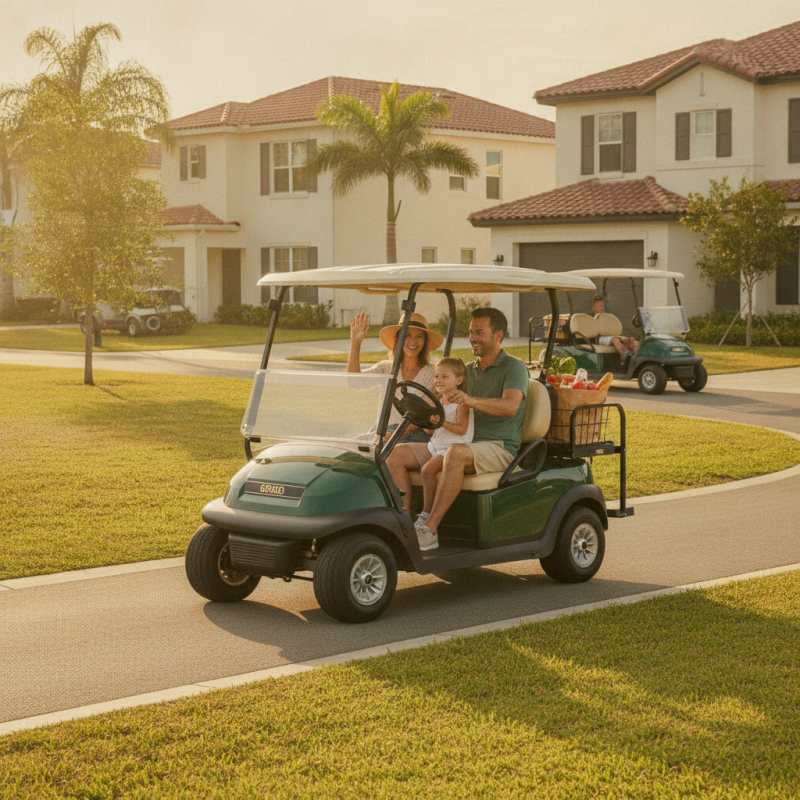
Golf carts are often associated with the golf course, but their utility extends far beyond that. In suburban areas and retirement communities, golf carts serve as convenient vehicles for short trips. Residents can quickly navigate the neighborhood, visiting friends or running errands. The compact size of golf carts allows them to maneuver through narrow streets easily, making them practical in these environments.
In addition to transportation, golf carts have other essential functions. Many people use them for landscaping or maintenance tasks. They are handy for moving equipment, tools, or supplies around larger properties. Additionally, during outdoor events, golf carts can transport guests efficiently. However, relying too heavily on golf carts can lead to a disconnect from walking or biking, which are healthier options. Finding a balance in their usage is crucial for maintaining an active lifestyle while enjoying the convenience golf carts offer.
Usage of Golf Carts in Everyday Life
Common Uses of Golf Carts in Residential Communities and Parks
Golf carts have become an essential part of daily life in many residential communities and parks. These small vehicles are ideal for short-distance travel. According to the National Golf Cart Association, the use of golf carts can reduce transportation costs significantly. They consume less energy compared to standard vehicles.
In gated communities, golf carts serve as a convenient way to navigate the area. Residents often use them for grocery runs or visiting neighbors. Additionally, parks utilize golf carts for maintenance and supervision, ensuring safety and quick response to incidents. Reports suggest that communities with golf cart access see a 30% increase in social interactions.
Tip: Always follow community rules when using a golf cart. Speed limits are often posted. It’s important to respect pedestrian areas.
Many people may find themselves struggling with limited space or tight turnarounds. Golf carts are smaller, but not always the most maneuverable. This can lead to potential traffic issues in crowded places.
Tip: Practice maneuvering in open spaces before heading to crowded areas. Understanding your vehicle's capabilities is key.
The Role of Golf Carts in Golf Courses and Recreational Areas
Golf carts play a significant role in golf courses and recreational areas, providing both convenience and accessibility. According to the National Golf Foundation, nearly 50% of golfers use carts during their rounds. This statistic highlights their importance in enhancing the golfing experience. Carts enable players to conserve energy, allowing them to focus on their game rather than getting fatigued from walking long distances on the course.
Beyond golf, these vehicles are increasingly utilized in parks and community areas. Many recreational facilities have adopted golf carts for maintenance and visitor transport. A report by the Outdoor Industry Association noted that outdoor recreation participation increased by 4% last year, leading to higher demand for efficient transportation within large areas. Golf carts effortlessly navigate pathways, connecting key facilities, which enhances the overall visitor experience. However, it is essential to address issues like congestion and safety on busy pathways, which can detract from enjoyment.
Despite their advantages, there are challenges to consider. The perceived environmental impact of gas-powered carts raise concerns among eco-conscious users. Electric carts present a cleaner alternative but can have limited range and require charging infrastructure. Balancing convenience with sustainability is an ongoing discussion in many communities. As the use of golf carts continues to evolve, stakeholders must navigate these complexities for future growth in recreational spaces.
What is a Golf Cart Used for in Everyday Life?
| Usage Area |
Purpose |
Common Features |
| Golf Courses |
Transporting players and their equipment |
Seating for 2-4 people, storage space, weather protection |
| Recreational Parks |
Leisurely transport around park areas |
Compact size, efficient for short distances |
| Residential Communities |
Transporting residents within large properties |
Electric power, low speed for safety |
| Event Venues |
Moving guests and equipment |
Custom designs for events, space for VIP seating |
| Sports Complexes |
Assisting with the movement of athletes and officials |
Enhanced stability, performance-oriented design |
How Golf Carts Enhance Mobility for the Elderly and Disabled
Golf carts are increasingly vital for enhancing mobility, especially for the elderly and disabled. Their compact size makes them perfect for navigating small spaces and crowded areas. With easy-to-use controls, these carts provide independence to those who may struggle with traditional mobility options. Many parks, golf courses, and community centers now offer golf carts for safe and simple transportation. This helps individuals participate in activities without feeling isolated.
Tips for selecting a golf cart for mobility needs include considering the terrain you'll navigate. Flat surfaces require less power than hilly areas. Understanding the battery life is crucial for longer outings. Many operators also benefit from evaluating seat comfort; this can make a huge difference during extended use.
While golf carts are a great mobility aid, they are not without limitations. Some users may find speed to be an issue. Others may struggle with steep inclines or uneven surfaces. It’s important to reflect on personal needs and environments before deciding on a specific model. This assessment can lead to better choices and improve overall satisfaction with the mobility solution.
The Environmental Benefits of Using Golf Carts for Short Distances
Golf carts are becoming popular alternatives for short-distance travel in communities. Using golf carts can significantly reduce carbon footprints. The U.S. Environmental Protection Agency reports that transportation accounts for nearly 29% of greenhouse gas emissions. Golf carts offer a low-emission option for short trips, contributing to cleaner air.
In urban areas, a significant percentage of trips are less than two miles. These distances are perfect for using golf carts instead of cars. Data shows that electric golf carts produce no tailpipe emissions. This is a step forward in addressing urban pollution concerns. Additionally, the use of golf carts can ease traffic congestion. They take up less space, making city driving more efficient.
However, some misconceptions linger. Many people think golf carts are only for golf courses. This limits their potential impact on daily commuting. Communities could benefit from expanding golf cart use. Local governments can help by supporting infrastructure. Charging stations can encourage more residents to use golf carts. While there's progress, awareness and acceptance are crucial. It's essential for neighborhoods to see the benefits of integrating golf carts into their daily lives. This shift can lead to a greener, more sustainable future.
FAQS
: Golf carts are used for short trips, like visiting friends or running errands.
They consume less energy compared to standard vehicles, reducing transportation costs.
Yes, they help with maintenance and ensure safety during outdoor events.
Over-relying on golf carts can limit physical activity, impacting health.
They may struggle with limited space or tight turns, causing traffic issues.
Always follow community speed limits and respect pedestrian areas when driving.
Yes, access to golf carts may increase social interactions by about 30%.
Practice maneuvering in open spaces to better understand the cart's capabilities.
They are handy for moving equipment and supplies on larger properties.
It can disconnect users from healthier activities like walking or biking.
Conclusion
Golf carts serve various essential functions in everyday life, significantly enhancing mobility and convenience. Primarily, they are used for transportation in residential communities and parks, where navigating short distances is often necessary. In golf courses and recreational areas, these vehicles facilitate easy movement, allowing users to enjoy their activities without fatigue. This article explores what a golf cart is used for, highlighting its importance in improving accessibility for the elderly and disabled individuals, ensuring they can participate in outdoor activities more comfortably.
Moreover, golf carts provide environmental benefits by reducing fuel consumption and lowering emissions compared to traditional vehicles, making them an eco-friendly option for short commutes. Their versatility and efficiency make golf carts an invaluable resource in various settings, ultimately supporting a more active and sustainable lifestyle.

 Sarr Golf