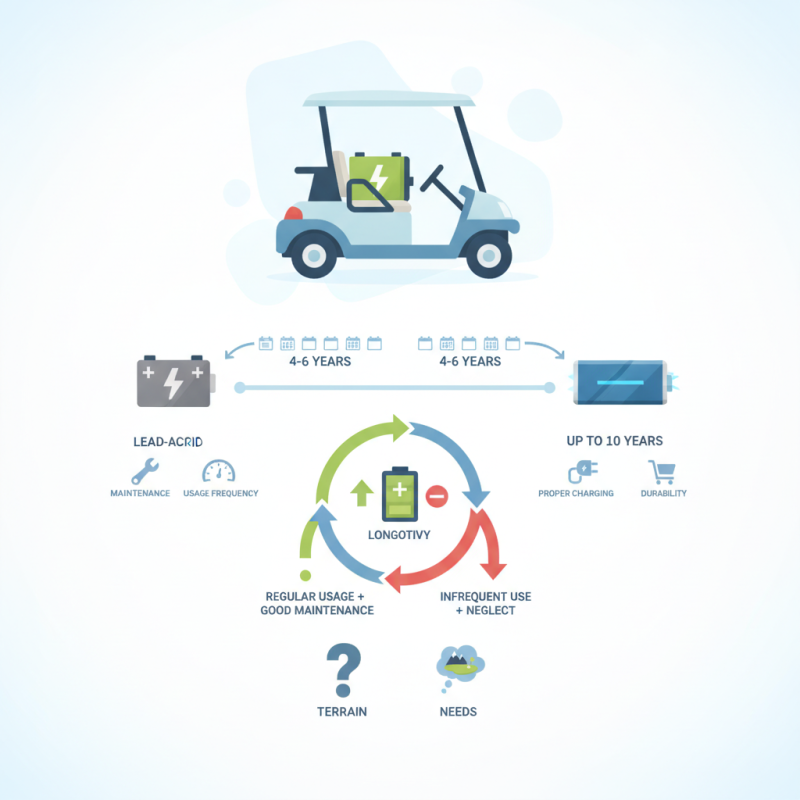
When considering the purchase of a golf cart, one critical question arises: how long does a golf cart battery last? Understanding battery lifespan is essential for informed buyers. According to industry reports, the average lifespan of a golf cart battery varies from 4 to 6 years, depending on several factors. These include battery type, usage frequency, and maintenance practices.
Lead-acid batteries, the most common choice, may need replacement sooner than lithium-ion options. However, lithium-ion batteries can last up to 10 years, making them a more durable investment. Buyers should also be aware of the importance of proper charging and maintenance, as neglect can significantly shorten battery life.
It's vital to reflect on your specific needs. Think about how often you will use the cart and the terrain it will navigate. Regular usage with good maintenance practices can lead to better performance and longevity. In contrast, infrequent use may result in battery degradation. Thus, understanding these dynamics helps buyers make more informed choices about their golf cart batteries.
The lifespan of golf cart batteries can greatly vary. Industry data shows that typical lead-acid batteries last between 3 to 5 years. Meanwhile, lithium batteries may last up to a decade. Key factors affect this longevity, including battery type and maintenance practices. Proper care can extend battery life significantly.
Temperature plays a crucial role in battery performance. Hot climates can reduce lifespan. In contrast, cold weather might impair charging capabilities. Moreover, charging habits influence longevity. Frequent partial charging can shorten battery life. Regularly charging to full capacity is healthier for most battery types.
Usage patterns also matter. Heavy, daily use drains batteries faster. Infrequent use may lead to sulfation in lead-acid batteries, hindering performance. Understanding these factors enables buyers to make informed decisions. Investing in better maintenance can yield significant returns. This strategic approach ensures that golfers maximize their battery lifespan effectively.
The lifespan of golf cart batteries varies significantly based on their type. Lead-acid batteries, commonly used, typically last around 3 to 6 years. Depending on usage, this lifespan can differ. Regular maintenance plays a crucial role here. If not properly maintained, the lifespan can shrink to just 2 years.
Lithium-ion batteries are gaining popularity. They often last 5 to 10 years, offering a longer option. These batteries charge faster and are lighter. This makes them a sought-after choice for many golf cart owners. However, they come with a higher upfront cost.
Using data from industry reports, battery degradation can happen faster in extreme temperatures. Hot climates can reduce lead-acid battery life to around 2 years. Cold weather affects lithium-ion batteries too. They may struggle in very low temperatures, impacting performance. Understanding these factors can help buyers make informed decisions.
Maintaining a golf cart battery is crucial for longevity. Industry data shows that properly maintained batteries can last up to 6 years. Battery activity is influenced by temperature, charging habits, and maintenance routines.
Regularly checking the water levels in your batteries is essential. Many fail to do this, leading to premature wear. Ensure batteries are charged after each use. Overcharging can be just as harmful. A study indicated that batteries charged improperly could lose up to 30% of their lifespan.
Cleaning the terminals and ensuring proper connections is another vital step. Corrosion can impair performance. Experts recommend using a mixture of baking soda and water for cleaning. Even minor neglect can drastically shorten battery life, so attention to detail is key for optimal performance.
This bar chart compares the average lifespan of different types of golf cart batteries. Lead acid batteries typically last around 3 years, while lithium-ion batteries can last up to 7 years. Gel, AGM, and nickel-cadmium batteries have varying lifespans, making them important considerations for buyers looking to maximize longevity.
When it comes to golf cart batteries, recognizing the signs of a replacement is crucial. A common indicator is a reduced run time. If your cart no longer holds its charge for the usual 20 to 40 miles, it may be time for a new battery. According to the Battery Council International, lead-acid batteries last about three to five years. If yours is nearing that age, watch for performance issues.
Another sign is a noticeable decline in power. If your golf cart struggles on inclines or cannot maintain speed, the battery may be failing. Additionally, physical damage such as corrosion or swelling can indicate underlying problems. Experts suggest checking battery terminals regularly. Corroded connections can lead to poor performance and short lifespan.
Finally, erratic charging times can signal trouble. If the battery takes longer than usual to charge or does not fully charge, this could reflect failure to hold a charge. Inefficient batteries not only affect performance but can also lead to further complications in your golf cart. Keeping an eye on these signs will help you maintain optimal performance.
When considering golf cart batteries, quality matters greatly. Investing in high-quality batteries can significantly reduce operational costs. According to a study by the National Golf Foundation, premium batteries can last up to 50% longer than standard options. This longevity means fewer replacements overall, saving money for the buyer.
Moreover, the upfront cost of top-tier batteries often deters buyers. However, research indicates that cheaper batteries can lead to more frequent failures. This results in higher long-term expenses due to maintenance and replacements. A report from Battery University states that well-made batteries can deliver consistent performance for 5-7 years, whereas lower models may only last 2-3 years.
Battery efficiency also affects the overall functionality of the golf cart. High-quality batteries offer better discharge rates. This translates into improved driving range and power. Less downtime leads to a smoother golfing experience. Reflecting on these aspects can help buyers make informed decisions. Balancing initial investment with potential savings is crucial in selecting the right battery.
: The lifespan varies due to battery type, maintenance practices, temperature, and usage patterns.
Lead-acid batteries usually last between 3 to 5 years with proper care.
Yes, lithium batteries may last up to a decade under good conditions.
Hot climates can reduce lifespan while cold weather affects charging capabilities.
Avoid frequent partial charging. Regularly charge batteries to full capacity for optimal longevity.
Heavy daily use drains batteries faster. Infrequent use can cause sulfation, especially in lead-acid types.
Regularly check water levels, avoid overcharging, and clean terminals to prevent corrosion.
Quality batteries can last 50% longer, reducing the need for frequent replacements and saving money.
Cheaper batteries often fail more frequently, leading to higher long-term expenses due to replacements.
High-quality batteries provide improved discharge rates, enhancing driving range and reducing downtime.
When considering how long does a golf cart battery last, several factors come into play, including the type of battery, usage patterns, and maintenance practices. Typically, lead-acid batteries can last around 4 to 6 years, while lithium-ion batteries may extend up to 10 years when properly cared for. Proper maintenance, such as regular charging and water level checks, can significantly extend battery life.
Additionally, recognizing signs that indicate a battery needs replacement, such as decreased performance or difficulty holding a charge, is crucial for maintaining optimal function. Investing in high-quality golf cart batteries can prove cost-effective over time, as they tend to have longer lifespans and superior performance, ultimately providing better value for golfers.

Sarr Golf