What Size Golf Cart Do I Need in 2026?

Time:2026-11-20 Author:Sienna
0%

Choosing a golf cart is not just a question of how many seats look comfortable. The right size depends on who will ride, what you will carry, and where the cart must go. If you are asking, “what size golf cart do i need,” start with your regular trips, not an occasional use case. A two-seat cart may suit a couple on paved paths. A four-seat model can help families, but it usually needs more parking space. Bigger is not automatically better.

Measure the tightest places the cart will pass or park. Check doorway widths, garage depth, storage height, and turning room. Then compare those measurements with the manufacturer’s listed cart dimensions. Payload matters, too. Add passengers, bags, tools, and accessories before deciding; a full bench can feel different from the showroom version. Check the owner’s manual or specifications for the cart’s rated capacity, rather than guessing from appearance.

Think about terrain and daily convenience. Long grass, slopes, and uneven paths may call for a model suited to those conditions, while narrow lanes favor a more compact footprint. Ask a dealer about turning radius, ground clearance, and available configurations, and test the cart on similar surfaces when possible. Small details count. A rear-facing seat or cargo box can change how the cart handles and fits in storage. It is easy to overestimate future needs. Still, buying too small can mean cramped rides or extra trips. Compare measurements, capacity, and intended use before choosing. A little uncertainty is normal; the best fit is the one that works for your real routine.
What Size Golf Cart Do I Need in 2026?

Identify Your Riders, Terrain, and Storage Limits Before Choosing

Start with the people who will ride regularly, not the maximum number listed in a sales description. A two-seat cart may suit a couple, but children, golf bags, or weekly guests can make four seats more useful. The National Golf Foundation reported 28.1 million on-course golfers in the United States in 2024. That figure describes the sport’s reach, not the size of your household, so treat it as context—not a passenger forecast. Count actual riders, then check the cart’s rated capacity and payload. Bags and groceries take space, too. Four seats can feel cramped.

Terrain changes the choice. On steep paths or uneven ground, compare ground clearance, braking, tire type, and the maker’s stated grade limits; seat count alone tells you little. For mostly flat routes, a smaller cart may be easier to turn and park. Measure the narrowest doorway, storage bay, and turning area, including mirrors and any rear cargo attachment. Leave room to walk around it and charge it safely. A tape measure beats a guess. I would recheck those measurements with the garage door open; I have seen small oversights matter more than an extra seat. Verify dimensions and load limits in the specific model’s technical sheet before choosing.

Compare Seating: 2-, 4-, and 6-Passenger Golf Cart Configurations

What Size Golf Cart Do I Need in 2026?

Compare Seating: 2-, 4-, and 6-Passenger Golf Cart Configurations

A 2-passenger cart suits a couple, solo errands, or a compact garage. It is usually the easiest configuration to park and maneuver on narrow paths. A 4-passenger model adds room for children or guests, but check whether all seats face forward. Some use a rear-facing flip seat that doubles as a small cargo platform. Six-passenger carts carry larger groups, yet their longer frames need more turning space and storage. Measure your garage and regular routes before choosing.

The National Golf Foundation’s 2024 participation report counted 26.6 million Americans who played golf on-course in 2023. That figure describes golfers, not cart demand, but it shows why shared rides matter at busy facilities. Seat count alone is a weak buying rule. Compare payload limits, legroom, battery range, and luggage space; steep paths and extra passengers can reduce practical range. I would not assume a six-seat cart fits every family. Sometimes it is simply too much vehicle.

Tip: Count your usual passengers, then add occasional cargo—not imaginary peak capacity. Check the cart’s specification sheet for total load and dimensions, and test its turning circle where you plan to drive. A little inconvenient, but worthwhile.

Check the Footprint: Club Car Onward 2-Passenger Measures 92.5 × 48.25 in

A stated two-passenger golf cart footprint of 92.5 × 48.25 inches converts to about 7 feet 8.5 inches long and 4 feet 0.25 inches wide. That sounds compact. Yet the width can decide whether it clears a shed doorway, storage bay, or tight turn. Measure the narrowest point, including mirrors or other projecting parts, because published body dimensions may not include them. Leave room to step in and out, too; a cart that fits tightly may still be awkward to park. Check the measurement method before buying.

For context, the U.S. Access Board’s 2010 ADA Standards specify a 36-inch minimum clear width for accessible routes. That is an accessibility benchmark, not a golf-cart-path design rule, but it shows why a 48.25-inch vehicle needs more than a narrow walkway. Measure the actual gate and turning area, not just the straight approach. A tape measure and a chalk outline can reveal surprises. I would also check the storage space with the charger and nearby obstacles in place; those details are easy to forget. Allow extra clearance for maneuvering, since the listed footprint does not describe the space needed to turn.

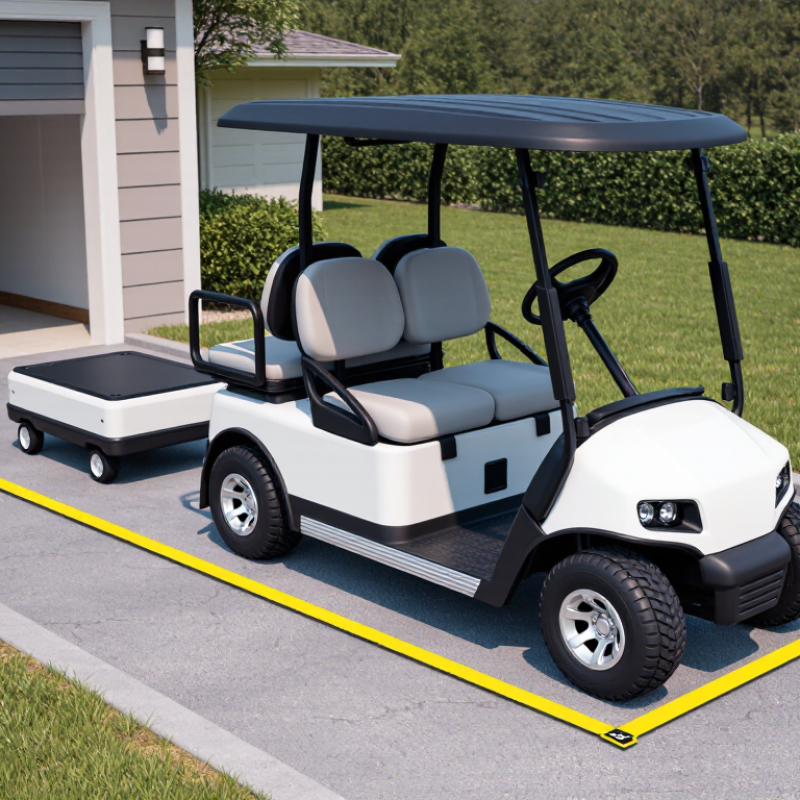
What Size Golf Cart Do I Need in 2026? Check the Footprint

A cart measuring 92.5 inches long by 48.25 inches wide has an approximate rectangular footprint of 31 square feet. Allow extra clearance for parking, turning, and access.

Match Payload and Cargo Needs to the Manufacturer’s Rated Capacity

Choosing a golf cart in 2026 means matching its rated capacity to the people and items it will carry. Seat count can mislead. A four-seat cart may still have limited payload capacity, so check the manufacturer’s rating and how it defines that limit. Some ratings include occupants, cargo, and installed accessories; others may specify separate limits. Read the manual, not just the sales label.

Do the arithmetic before choosing. For example, four adults weighing about 170 pounds each total 680 pounds. Add 120 pounds of tools, bags, or groceries, and the load reaches 800 pounds before accounting for accessories. If the stated payload limit is 900 pounds, confirm whether those accessories count toward it. Numbers can surprise. Leave a practical margin for weight estimates that are a little off.

Think about where the cart will go, too. A level path to a nearby practice area may need little cargo space, while hauling coolers across a property calls for more capacity. Towing limits are separate from passenger and cargo ratings; verify them independently. Avoid sizing to a best-case day. Plans change, and a cart that feels roomy can still be overloaded.

Distinguish Golf Carts (Up to 20 mph) from NHTSA-Classified LSVs (20–25 mph)

What Size Golf Cart Do I Need in 2026?

Choosing a cart starts with its real job: quiet trips across a property, or regular travel on roads where permitted. A golf cart generally travels at 20 mph or less. A low-speed vehicle (LSV) is a distinct federal category, not just a faster cart. Under NHTSA’s Federal Motor Vehicle Safety Standard No. 500, an LSV is designed for speeds above 20 mph and up to 25 mph, with a gross vehicle weight rating below 3,000 pounds. It also requires specified safety equipment, including seat belts, lamps, mirrors, and a parking brake. Check the vehicle label and documentation; a speed claim alone does not establish its classification.

For a couple carrying clubs, groceries, or a child’s backpack, a two- or four-seat layout may be enough. Frequent passengers or bulky gear can make a six-seat model more practical, but its longer frame needs more turning and storage space. That trade-off is easy to underestimate. Measure your garage opening, narrow paths, and usual parking area before deciding. NHTSA’s standard defines the LSV category; it does not mean every road allows LSV use. Local rules and road conditions matter.

Tip: Pick the seating and cargo capacity first, then confirm speed category, safety equipment, and permitted routes. A tape measure can save an awkward return.

FAQS

Which golf cart size works best for two people?

A two-passenger cart suits couples, solo errands, and compact garages. It is usually easier to park on narrow paths. Less room for bags, though.

When should I consider a four-passenger cart?

Choose one if children or guests often ride along. Check whether every seat faces forward. Some rear seats flip into a small cargo platform.

Is a six-passenger cart right for a large family?

It can carry larger groups, but its longer frame needs more turning space and storage. Measure your garage and usual routes. Bigger is not always better.

What measurements should I check before buying?

Compare the cart’s dimensions with your doorway, storage bay, and tightest turn. One example measures 92.5 by 48.25 inches. Check whether mirrors add width.

How much clearance should I leave around a parked cart?

Leave space to turn and step in or out, not just enough room for the body. A chalk outline can reveal awkward corners. Easy to miss.

How do I check whether a cart can carry my passengers and cargo?

Read the rated payload limit and check what it includes. Four adults at 170 pounds each total 680 pounds. Add 120 pounds of bags, and that is 800 pounds before accessories.

Do extra passengers affect driving range?

They can. More passengers, cargo, and steep paths may reduce practical battery range. Use your regular route when judging what you need.

Are towing capacity and payload capacity the same?

No. Towing limits are separate from passenger and cargo ratings. Check each limit in the manual. I might still misjudge a load, so leave a margin.

Conclusion

To decide what size golf cart do i need, start with the number of people you’ll usually carry, the terrain you’ll travel over, and the space available for parking or storage. A two-passenger cart can be easier to maneuver and store, while four- and six-passenger layouts offer more room for family, guests, or equipment. Check the cart’s full footprint before buying; one compact two-passenger configuration, for example, measures about 92.5 by 48.25 inches.

Next, compare the manufacturer’s rated capacity with the combined weight of riders and cargo, and consider how hills, uneven paths, or frequent hauling may affect your needs. Seating capacity alone does not determine how much you can safely carry. Also distinguish standard golf carts, typically designed for speeds up to 20 mph, from low-speed vehicles in the 20–25 mph range. Choose a configuration that fits your intended use, storage limits, and operating requirements.

Sienna

Sienna

Sienna is a skilled marketing professional with a deep expertise in our company’s core products and services. With a passion for innovation and detail, she plays a pivotal role in crafting insightful blog posts that not only highlight the unique features of our offerings but also provide valuable......